
|
Gone To Texas Texas was at one time such a popular settlement destination that often a deserted house would be found with nothing more than three letters, GTT, on the door� for Gone To Texas! This special school tour is designed to introduce students to the history of the North Texas area during the time of the pioneers. It is geared toward third and fourth grades. Statement of Purpose | TEKS | Objectives | Buildings on Tour | Before your tour | After your tour | Other important information The purpose of the tour "Gone to Texas" is to provide an awareness of what life was like in North Central Texas between 1840, when the first permanent settlers came from the East, and 1872, when the railroad brought goods and new technology to the growing frontier. This awareness will come through the interpretation of selected structures and material objects at Old City Park. TEKS - Texas Essential Knowledge and Skills for Social Studies Covered in the Tour Grade 3
Grade 4
Buildings on Tour: Renner School, Potter�s Shed, and the 1860�s Living Farmstead Renner School: 1888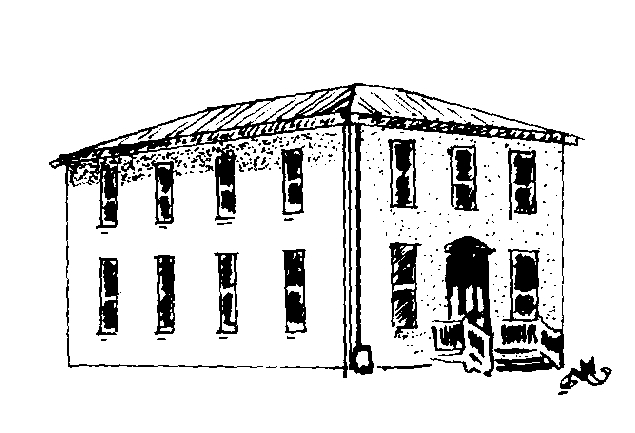 Education was important to the pioneers, most of whom recognized
that a knowledge of reading, writing and arithmetic would aid the future prosperity of their
children. However, most families could not spare their children to attend school as it was more
important to have them helping on the farm or with household duties. School terms were
determined by the fall planting and spring harvesting, which varied throughout the area
and usually resulted in six to nine month long terms.
Renner School was built in 1888 in a small rural community north of Dallas.
This school housed grades one through five in the downstairs classroom and grades six and
seven upstairs in the "high school." This structure was used as a school until 1919 when
the community decided to build a new school. The gray paint of the walls, the door trim,
and the windows and blackboards (simply boards painted black because of the high cost of slate)
are all original; water buckets, lunch pails, and the pot bellied stove are all typical of
country schools.
The school day usually began at 8:30 AM with scripture reading and prayer, followed by
individual subjects such as reading, writing, arithmetic, algebra, penmanship, geography, and
morals and manners. Parents were responsible for providing books and because of their expense,
textbooks were handed down to the younger members of the family. Students would write on small
slates in order to save paper. Discipline in the school was strictly enforced, with any kind of
mischief punishable by the switch, ruler, dunce chair, or public dismissal from school.
Potter�s Shed: 1893
Education was important to the pioneers, most of whom recognized
that a knowledge of reading, writing and arithmetic would aid the future prosperity of their
children. However, most families could not spare their children to attend school as it was more
important to have them helping on the farm or with household duties. School terms were
determined by the fall planting and spring harvesting, which varied throughout the area
and usually resulted in six to nine month long terms.
Renner School was built in 1888 in a small rural community north of Dallas.
This school housed grades one through five in the downstairs classroom and grades six and
seven upstairs in the "high school." This structure was used as a school until 1919 when
the community decided to build a new school. The gray paint of the walls, the door trim,
and the windows and blackboards (simply boards painted black because of the high cost of slate)
are all original; water buckets, lunch pails, and the pot bellied stove are all typical of
country schools.
The school day usually began at 8:30 AM with scripture reading and prayer, followed by
individual subjects such as reading, writing, arithmetic, algebra, penmanship, geography, and
morals and manners. Parents were responsible for providing books and because of their expense,
textbooks were handed down to the younger members of the family. Students would write on small
slates in order to save paper. Discipline in the school was strictly enforced, with any kind of
mischief punishable by the switch, ruler, dunce chair, or public dismissal from school.
Potter�s Shed: 1893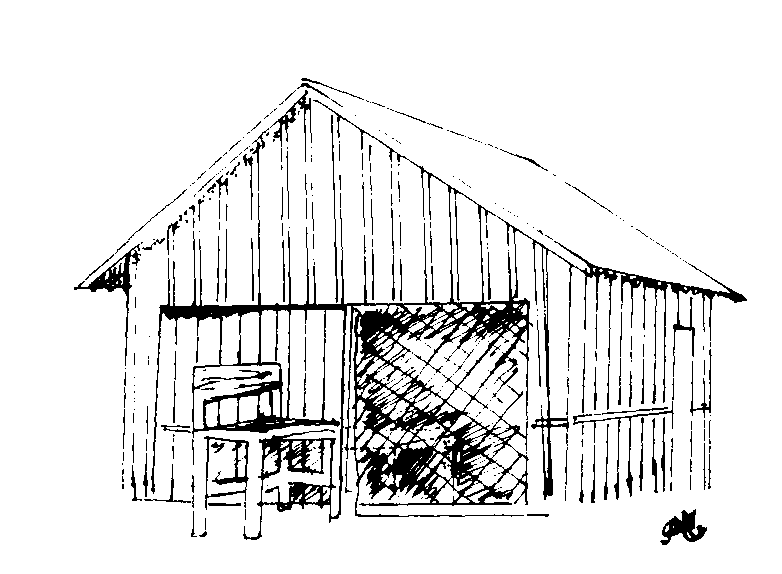 Pottery has been made in Texas for centuries. With the obvious abundance of clay, Native
Americans were encouraged to create earthenware vessels; and later, in the 16th century,
with the arrival of the Spaniards, these same Native Americans were introduced to the technique
of wheel-made or "thrown" pottery.
The pioneer potter�s primary need was to be near good clay, water, and firewood. Since good
clay is usually found in areas also suitable for agriculture, pioneer potters would farm as a
profession and make pots on a part-time basis. However, as the population of a community
increased, so did the demand for storage and cooking containers and the potter was able to
devote more time to his trade. By the mid 1800s, there were twelve pottery plants operating
in Texas.
Before firing, pots are laid out to dry; at this stage, they are still very fragile and not
useable as they are still water soluble. It is the extreme heat of the firing process which
gives them strength. The groundhog kiln at Old City Park is a replica of the kilns used by
early Texas potters. When the potter has enough pieces for a full load, he crawls into the kiln
and places the pots into the firing chamber. After he crawls back out, he starts a wood fire
in the firebox. A wood-fired kiln takes from twelve to twenty-four hours of stoking to reach
a maximum temperature of 1260 C, or 2268 F. During the last few hours of firing, known as
"blast off", fuel is added as quickly as it is consumed in an effort to keep the
heat rising.
After the manual firing is completed, the firebox door is closed, all spy hole bricks are
replaced, and the low chimney is covered with a piece of metal. Two to three days may pass
before the kiln can be opened; not only are the pots too hot to touch, but too-rapid cooling
will cause a contraction of the clay and the pots will crack.
Texas potters generally fired their wares once a month. The loss of a load was critical as it
meant the loss of income for the entire period of throwing, glazing, drying, and firing.
The 1860�s
Living Farmstead
Pottery has been made in Texas for centuries. With the obvious abundance of clay, Native
Americans were encouraged to create earthenware vessels; and later, in the 16th century,
with the arrival of the Spaniards, these same Native Americans were introduced to the technique
of wheel-made or "thrown" pottery.
The pioneer potter�s primary need was to be near good clay, water, and firewood. Since good
clay is usually found in areas also suitable for agriculture, pioneer potters would farm as a
profession and make pots on a part-time basis. However, as the population of a community
increased, so did the demand for storage and cooking containers and the potter was able to
devote more time to his trade. By the mid 1800s, there were twelve pottery plants operating
in Texas.
Before firing, pots are laid out to dry; at this stage, they are still very fragile and not
useable as they are still water soluble. It is the extreme heat of the firing process which
gives them strength. The groundhog kiln at Old City Park is a replica of the kilns used by
early Texas potters. When the potter has enough pieces for a full load, he crawls into the kiln
and places the pots into the firing chamber. After he crawls back out, he starts a wood fire
in the firebox. A wood-fired kiln takes from twelve to twenty-four hours of stoking to reach
a maximum temperature of 1260 C, or 2268 F. During the last few hours of firing, known as
"blast off", fuel is added as quickly as it is consumed in an effort to keep the
heat rising.
After the manual firing is completed, the firebox door is closed, all spy hole bricks are
replaced, and the low chimney is covered with a piece of metal. Two to three days may pass
before the kiln can be opened; not only are the pots too hot to touch, but too-rapid cooling
will cause a contraction of the clay and the pots will crack.
Texas potters generally fired their wares once a month. The loss of a load was critical as it
meant the loss of income for the entire period of throwing, glazing, drying, and firing.
The 1860�s
Living Farmstead
Your tour will visit with guides in the Farmstead: these "first-person" characters will help your students learn about life on the frontier. Remember here the year is always 1861. 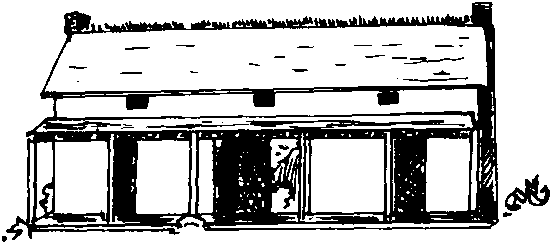 Log House:
During the winter of 1845-1846, Andrew Watson Anderson constructed two log rooms
that were separated by a ten-foot covered breezeway called a "dog trot." Native oaks were
cut and hewn for the walls; wood and rock fragments were used as chinking between the logs.
Nails were hand-wrought from iron and the chimney bricks were made locally. Because of the
poor transportation into North Central Texas in the 1840s, early settlers would have to
manufacture almost every part of a building. Those items which could not be made, such as
window panes, were either brought on the wagons or just done without. The "dog trot" style of
architecture was popular throughout the South because it provided an open, protected area where
the family could eat, socialize, carry out chores, and even sleep in warm weather. A fireplace
in each room provided heat and a place to cook. Rooms were thought of as the shelter where
people retreated in the winter, bad weather, or when danger threatened. The first pioneers
had to be self-sufficient. They grew grain and vegetables, hunted wild animals for meat,
obtained milk from cows, eggs from chickens, and wool from sheep which they spun into thread
and wove into cloth for their clothing. They made their own soap and candles from extra fat
and lye taken from the ashes in the fireplace. They could not afford to waste anything.
Log House:
During the winter of 1845-1846, Andrew Watson Anderson constructed two log rooms
that were separated by a ten-foot covered breezeway called a "dog trot." Native oaks were
cut and hewn for the walls; wood and rock fragments were used as chinking between the logs.
Nails were hand-wrought from iron and the chimney bricks were made locally. Because of the
poor transportation into North Central Texas in the 1840s, early settlers would have to
manufacture almost every part of a building. Those items which could not be made, such as
window panes, were either brought on the wagons or just done without. The "dog trot" style of
architecture was popular throughout the South because it provided an open, protected area where
the family could eat, socialize, carry out chores, and even sleep in warm weather. A fireplace
in each room provided heat and a place to cook. Rooms were thought of as the shelter where
people retreated in the winter, bad weather, or when danger threatened. The first pioneers
had to be self-sufficient. They grew grain and vegetables, hunted wild animals for meat,
obtained milk from cows, eggs from chickens, and wool from sheep which they spun into thread
and wove into cloth for their clothing. They made their own soap and candles from extra fat
and lye taken from the ashes in the fireplace. They could not afford to waste anything.
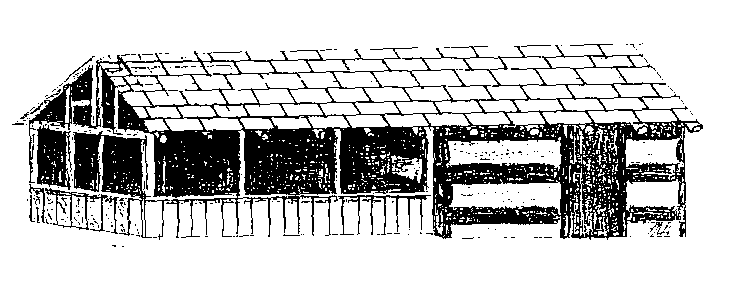 Blacksmith Shed: This shed is furnished as a workshop, with tools for blacksmithing and other work
which would be necessary to keep a frontier farm in good working order. The pioneer farmer
would only use this shed when it was necessary to make or repair a tool or other implement;
most of a farmer�s time is spent outside taking care of the animals and garden, or in the house
working on more domestic activities. Visit with the farmer, and find out about today�s chores!
Ask about the heritage varieties of animals which are raised for food, milk, and fiber, or learn
about the kinds of vegetables which farmers grew to feed their families and livestock. Although
certain types of labor are often divided between genders, on a small farm it is often necessary
for people to cross over traditional lines to get the job done.
Blacksmith Shed: This shed is furnished as a workshop, with tools for blacksmithing and other work
which would be necessary to keep a frontier farm in good working order. The pioneer farmer
would only use this shed when it was necessary to make or repair a tool or other implement;
most of a farmer�s time is spent outside taking care of the animals and garden, or in the house
working on more domestic activities. Visit with the farmer, and find out about today�s chores!
Ask about the heritage varieties of animals which are raised for food, milk, and fiber, or learn
about the kinds of vegetables which farmers grew to feed their families and livestock. Although
certain types of labor are often divided between genders, on a small farm it is often necessary
for people to cross over traditional lines to get the job done.
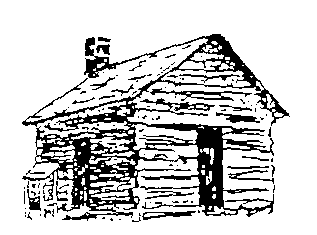
Kitchen: Log kitchens allowed the early settlers to separate the smells, smoke, heat and danger of fire from the living quarters. Utilitarian in design, they often had dirt floors, exposed rafters, and few windows. Often, pioneers hastily built first cabins and then converted them into kitchens once their larger log houses were ready for use. The fireplace held a wide hearth which allowed room for cooking on a bed of coals. Dutch ovens, gridirons, and long-legged skillets, called spiders, would be set on top of the coals to bake or fry foods. A pivoting iron arm, known as a crane, was installed on one inside wall of the fireplace. It provided a means of suspending utensils over the fire while allowing the cook to control the temperature and time by swinging the crane away from the fire. Vegetables such as potatoes, corn, onions, even nuts, were placed in hot ashes and coals to roast. Fruit such as apples were dried in front of the fire on racks. Located in front of the log kitchen is an herb garden. Many pioneers brought the plants they were familiar with for seasoning and medicinal purposes, as often they were not available locally.
To see other buildings not included in this list or on your tour, students and teachers are invited to return for a weekend visit or another school tour, such as our Candlelight or African-American Heritage Tours.
GONE TO TEXAS
Answers: 1. High school; 2. Slates; 3. Chinking; 4. Dog trot; 5. Detached; 6. Preserve; 7. Kiln; 8. Wheel; 9. Coal; 10. Dutch Other Suggested Activities * Make a punched tinker by using an aluminum pie pan, paper, cardboard, and a thumb tack. Draw a design on the paper, such as a star, heart, or flower, and tape the paper to the inside of the pie pan. Place the cardboard underneath the pan, and then have the child punch holes with the thumb tack along the outline of the design. Punch a bigger hole on the rim of the pan and put string in it so that it may be hung. * Have the kids do a pioneer spelling bee that is associated with words at the park. Suggested words are: chinking, detached, breezeway, groundhog kiln, pioneer, frontier, and hand hewn. |
|
|Visitor Information | Calendar/Upcoming Events | Virtual Tour | Tours | Summer Camps| | Third Saturday Series | 1860's Farm | Rentals | Membership | Museum Store | Brent Place Restaurant| | Employment & Volunteer Opportunties | Contact Us | Local Links | What's New | Museum History| |